Altria is scheduled to announce its fourth quarter earnings on
January 25. The U.S.-based tobacco company posted strong results in the
third quarter with 2% y-o-y growth in both revenues and gross margin.
For the nine months ended September 2012, revenues and gross margin were
up 4% and 9% y-o-y respectively. Revenue growth was led (in absolute
terms) by smokeable products (up 2.1% y-o-y), followed by smokeless
products (up 2.6% y-o-y). Revenue growth in both the segments was driven
by higher list prices and higher reported shipment volume,
partially offset by higher promotional investments and higher volume
growth in discount brands. Effective cost management due to the ongoing
cost reduction program added to the effect of higher list prices to push
operating margins higher for the company.
понедельник, 28 января 2013 г.
Altria’s Earnings Rely On Better Pricing For Smokes

пятница, 25 января 2013 г.
Just the Facts on Smoking

We applaud Judge Gladys Kessler’s ruling ordering tobacco companies to
publish corrective statements that say they lied to us about the dangers
of smoking and that clearly state the deadly health effects of smoking.
These statements are not “forced public confessions,” just the
indisputable truth.
The statements will also correct public misconceptions about the health
benefits of “low tar” and “light” cigarettes. Smoking kills, on average,
1,200 Americans a day. We think that it is shameful that Big Tobacco
has been concealing the dangers of smoking for decades.
In the United States, smoking kills more people than AIDS, alcohol, car
accidents, murders, suicide, drugs and fires combined, according to The New York Times. It’s time the
American public heard that sobering fact from the companies that have
profited from the loss of life. It’s not easy to tell the truth when
you’re Big Tobacco, but the time to do so is now.
четверг, 10 января 2013 г.
Kim Jong Un loves comic books and foreign cigarettes

Kim Jong Un, top leader of the Democratic People’s Republic of Korea (DPRK), has largely been a mystery to the whole world. His personal life was rarely reported in the country’s official media, but S.Korean media has dished out some fun facts about him as a person.
For one thing, Kim Jong Un seems to be a devoted reader of Japanese comics, according to a former classmate of his.
“He liked comics especially Japanese manga.”
Classmates said he is also an avid skier and a computer-game player, and fanatical about basketball — particularly the fortunes of the Chicago Bulls.
Kim is also crazy about James Bond, Jean-Claude Van Damme and Jackie Chan movies.
Also, pictures released by KCNA show Kim Jong Un enjoying a cigarette moments after the launch of its rocket Wednesday morning, reports .
It’s not the first time Kim has been pictured with a cigarette by KCNA, with footage of him visiting a gymnasium earlier this year sparking controversy for showing him using gym equipment with cigarette in hand.
Kenji Fujimoto, Kim Jong Il’s former sushi chef, was reported to have said that Kim Jong Un began to smoke cigarettes and drink liquor when he was around 15.
According to reports, Fujimoto said Kim Jong Un was “one who loves to smoke,” adding that he likes to smoke Yves Saint Laurent, among others.
четверг, 3 января 2013 г.
Just what is third-hand smoke?

Smoking is bad for your health. And second-hand smoke - the cloud of cigarette exhaust that we inhale when those around us are smoking - is nearly as dangerous.
But what about third-hand smoke? Chances are you've never heard of this concept before, but it "could have some dangerous health consequences," said Greta Roberts Broneil, assistant director of health for the town of Stratford.
Third-hand smoke refers to the chemicals in smoke that stick around long after a cigarette is extinguished. They linger on clothes, in hair, on skin, in carpets and blankets, and on walls, toys and any number of surfaces.
In an effort to inform the public about this little-known concept, Stratford is launching a third-hand-smoke awareness campaign after the start of the new year, according to CTPost.com. The program aims to help people, particularly children, limit their exposure to these chemicals, which can include nicotine, arsenic and lead.
It's not exactly clear how dangerous third-hand smoke is, but health experts said it makes sense that smoke residue can be unhealthy if inhaled or ingested. Broneil said children are particularly vulnerable to third-hand smoke as they're more apt to crawl or roll around on the floor and put toys and other items in their mouths
The American Cancer Society has said that no cancer risks from third-hand smoke have been measured, but the health effects of these residual chemicals are "an active area of research."
среда, 19 декабря 2012 г.
Low nicotine cigarettes would reduce smoking
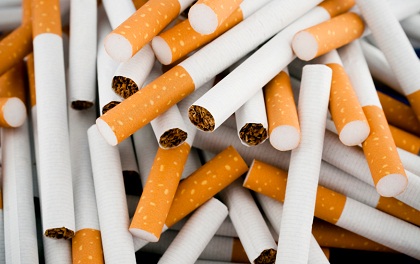
Introducing a low tax category for very low nicotine content cigarettes would rapidly reduce smoking rates to much lower levels, according to a public health medicine specialist.
In his study, published in the New Zealand Medical Journal, End Smoking NZ Trust chairman Murray Laugesen found that imposing less tax on denicotinised, or denic, cigarettes would reduce consumption of normal, addictive cigarettes.
A two-tier excise policy would be kinder to smokers, allowing them to select and smoke a mix of expensive addictive cigarettes and low-cost denics to control smoking costs, reduce cravings and help people quit, according NZ Herald.
"A lower tax rate classification for denics would make it politically easier to increase the price of (addictive cigarettes) and thereby reduce smoking more rapidly to much lower levels," Dr Laugesen concluded.
He said all cigarettes generate toxic chemicals in the smoke regardless of nicotine content, but reducing the degree of addiction would make success easier for the one third of smokers who attempt to quite each year.
"Sale of denic cigarettes wherever (addictive cigarettes) are sold would provide an escape product for addicted smokers facing higher prices each January over the next four years."
He said denics could succeed in New Zealand because smokers would not be asked to quit smoking, only to smoke less nicotine.
понедельник, 10 декабря 2012 г.
Council ready for law on new smoking bans S

DUBBO ratepayers will save money and perhaps live longer and healthier lives when state enforcement of smoke-free outdoor public places starts next month.
From January 7, smokers will risk fines of up to $550 if they light up at the entrance to shopping centres, hotels, schools and other prohibited areas.
The law that NSW Health officers will enforce will eclipse a well-intended but "reasonably toothless" non-smoking policy introduced by Dubbo City Council in 2005 for all its facilities, according to Daily Liberal.
It had been responsible for advertising the pioneering policy - a cost of about $10,000 to ratepayers - but now the duty will lie with the government department.
The savings are just one reason why council community services director David Dwyer has welcomed the imminent introduction of the reforms.
"Certainly in the long-term you pay less for smoking-related diseases, not just in smokers, but also passive smokers," Mr Dwyer said.
"Hopefully it will encourage people not to take up smoking, and they can use their money for something else like gym fees, private health insurance or kids' education."
The council and its counterparts across the state received notification of the amendments to the Smoke-free Environment Act 2000 last week.
In a letter, chief health officer Kerry Chant said the changes to the act would outlaw smoking at a number of public facilities including playgrounds, swimming pools, sports grounds and public transport stops and stations.
Some of those had already been the subject of council policy, but Mr Dwyer said the "big one" for everyone would be the ban on smoking within four metres of a pedestrian entrance to or exit from a public building.
There was a long list of types of buildings covered by the act and it was likely to have ramifications at Dubbo.
вторник, 4 декабря 2012 г.
'Hiding' Cigarettes in Stores Might Keep Kids From Smoking

U.S. teens are much less likely to buy cigarettes if they are hidden from view, new research suggests.
The study tracked the purchases of a group of adolescents as they "shopped" in several different virtual convenience stores that contained different cigarette sale scenarios. Some stores featured open displays of tobacco products for sale, while others strategically hid their cigarettes behind a cabinet. Similarly, cigarette advertising was either prominent, hidden or banned.
"Studies show that because tobacco displays and ads are so common in stores, they may give kids the false perception that smoking cigarettes is a common behavior," explained study author Annice Kim, a research public health analyst with the public health policy research program at RTI International in Durham, N.C. "Tobacco displays also influence adults to purchase cigarettes when they had not planned to, which may make it harder for current smokers to quit and may even influence recent quitters to relapse."
Passage of the U.S. Tobacco Control Act in 2009 gave states and local governments the legal means to tackle the issue by allowing them to restrict various aspects of cigarette advertising strategy and placement, informs Health Day.
"[So] banning the visible display of tobacco products is one option that states are considering," along the lines of current bans already in place in both Canada and Australia, Kim said.
воскресенье, 25 ноября 2012 г.
Cape Breton could face public smoking ban

The Cape Breton Regional Municipality is looking into a new by-law that would ban people from smoking outside municipal rinks, parks, playgrounds and trails.
Coun. Clarence Prince is leading the push to take the smoking ban one step further.
"We're asking you to consider the health of others while you're out there and please don't smoke in those spots that children are available," he said.
CBRM staff was asked to look into the public smoking issue and they came back this week with a recommendation against a ban saying there was a lack of community concern and it would be hard to enforce.
Prince said he doesn't agree.
"It is certainly a public concern because we have a high cancer rate in the CBRM, which we're not too proud off," he said.
Staff has been asked to review their position and write up a draft by-law. Cliff Barron from North Sydney is a smoker, but he said people shouldn't be smoking around children.
"Well, I think it should be in effect, especially around rinks, where there's so many children. It's not a good policy to see kids all surrounded here with grown-ups smoking outside."
He said the ban might help him personally.
"It'd cut down on my smoking, let's put it that way. I'm in the process of giving them up anyway."
Prince said enforcing the by-law would be difficult, but that it would be still be worth making it official.
With the report now back in the hands of CBRM staff, it'll be a few months before smokers find out whether or not they'll be allowed to continue lighting up in public places, says CBCNEWS.
среда, 21 ноября 2012 г.
Cost of Cigarettes May Be Increasing in Kentucky

Smokers could soon be paying more for their cigarettes in Kentucky.
The Blue Ribbon Commission on Tax Reform endorsed a proposal to raise the cigarette tax to one dollar a pack from the current 60 cents.
Governor Steve Beshear appointed the tax panel earlier this year to recommend a simpler tax code that would generate enough revenue to meet state needs even during recessions.
Members of the group have ruled out some less popular proposals, including implementation of a 6 percent tax on groceries, and also reinstating an estate tax in Kentucky.
The panel's recommendations could be presented to Governor Beshear as soon as next month, informs Tristate.
суббота, 10 ноября 2012 г.
Help low-income smokers quit

The Newfoundland and Labrador Medical Association is recommending the province offer low-income smokers free prescription and over-the-counter drugs to help them quit.
Products like nicotine gum and the patch can help ease people off tobacco, but can cost up to $370 for a 12-week supply.
For the doctors, it's simple math — pay to help people stop smoking today and save millions in the health care budget tomorrow.
The government says it will look at what other provinces do before making a decision, says CBCNEWS.
вторник, 6 ноября 2012 г.
Toronto won't licence hookah parlours

Committee members weren't satisfied Friday with a staff report that recommended giving out licenses as a way to regulate the growing number of water pipe smoking businesses — or hookah bars — in Toronto, informs CBC News.
Hookah, also known as shisha, narghile or goza, comes in either tobacco or herbal form and is smoked through a water pipe that heats the substance with charcoal and cools the smoke in a water chamber before it is inhaled through a hose and mouthpiece.
Smoking in enclosed public and work spaces was banned by the Smoke-Free Ontario Act in 2006, making it illegal for hookah lounges to serve tobacco shisha indoors. The smoking ban doesn't cover non-tobacco herbal shisha that hookah establishments offer in a variety of fruity flavours.
The report's proposed rules would have required hookah bars to retain ingredient lists and packaging to prove that the shisha they offer is tobacco free. They would also have had to maintain proper ventilation to address air quality concerns over shisha smoke and burning charcoal from the hookah pipe.
The licensing division's report estimated there are approximately 80 restaurants, bars and cafes that offer hookah in Toronto.
Toronto Public Health has laid charges against 25 establishments for providing tobacco shisha since 2010.
But some owners of establishments which offer water pipe smoking say there are already enough regulations in place.
пятница, 26 октября 2012 г.
TTPD seeking suspects in tobacco store armed robbery

Texarkana, Texas police are searching for the gunmen in the robbery of a tobacco store Wednesday night. Officers were called to the Tobacco Store in the 2800 block of New Boston Road just before 9 p.m., where they were told that two armed, masked gunmen had just robbed the store.
The employees say they were approached inside the store by the two men, who demanded money. One was wearing a black ski mask, black hat and a light-colored jacket. The other was wearing a black hat, black mask and a blue shirt. After taking the clerks to a back room, the gunmen fled on foot. No one was injured.
Smartphone Apps Encouraging Young People to Smoke

Public health officials say tobacco companies are circumventing a worldwide ban on youth-targeted advertising by marketing smartphone applications, or "apps," designed to entice young people to smoke. Armando Peruga is program manager for the World Health Organization’s Tobacco-Free Initiative. He says there is a popular new type of software that's proliferating in Internet app stores and being downloaded to young peoples' mobile devices and smartphones. These mobile apps glorify smoking and encourage children to use tobacco products. Peruga describes one such app he recently discovered online.
“I was taken aback by a game that’s called “Puff, Puff, Pass,” which is an application that’s a cartoon came where the user must click on game characters to order them to smoke and pass the cigarette to the other characters. And the user collects points if he or she continues passing cigarettes in the same sequence at a fast pace. Obviously, that can only be directed at younger kids," said Peruga. Billions of people now have smartphones, and a large percentage of them are children. In a study conducted by Australian researchers, who searched application stores using key words such as “smoke,” “cigarette,” and “cigar,” investigators found more than 100 related applications.
The apps included not just games and social utilities, but more direct pitches promoting specific brands of tobacco products and providing information about where those products could be purchased. Peruga notes that often, the names of the apps are misleading. “These apps, the study identified about 107, of these pro-smoking apps are classified under names such as health and fitness and just games which can be very misleading, and anyone can access [them] - especially young kids," he said. The authors believe the distribution of pro-smoking smartphone applications violates the World Health Organization Convention on Tobacco Control, which bans all advertising and promotion of tobacco products in the media in countries that are signatories to the treaty. An article on the proliferation of pro-tobacco smartphone apps is published in the journal Tobacco Control.
Within 20 minutes, heavy secondhand smoke may affect breathing

People exposed to heavy concentrations of secondhand smoke in confined spaces, such as bars and cars, experience impaired breathing and airway restriction within 20 minutes, according to a small new study. "Bars and cars are places where high concentrations of fine particles usually occur because of smoking," said Dr. Panagiotis Behrakis, of the University of Athens, in Greece, in a news release from the American College of Chest Physicians.
"Nonsmokers are then forced to inhale extreme amounts of particulates directly into their lungs. The observed short-term effects of secondhand smoke tell us that even a short exposure is indeed harmful for normal airways." In conducting the study, researchers from the University of Athens, the Hellenic Cancer Society in Greece and the Harvard School of Public Health exposed 15 healthy people to high concentrations of secondhand smoke for 20 minutes.
The participants were exposed to the smoke in a chamber to mimic exposure to secondhand smoke in confined spaces. During the exposure, the researchers assessed the participants' total respiratory impedance, resistance and reactance. They found the effects of short-term exposure to concentrated secondhand smoke are immediate and significant.
The study was presented recently at the American College of Chest Physicians' annual meeting in Atlanta. Data and conclusions presented at meetings should be considered preliminary until published in a peer-reviewed medical journal.
DeKalb bans smoking in parks

The Atlanta Journal-Constitution No more puffing away in DeKalb County parks. A year after snuffing out an effort at a ban in all public places, the County Commission Tuesday approved banning smoking from playgrounds, parks and service lines such as for ATMs, effective Wednesday. But smokers still will be able to light up in bars and strip clubs — the source of last year’s controversy. “The best action at this point is to move in gradual steps,” said the health board director, Dr. Elizabeth Ford, who pushed for the ban.
“Having our playgrounds and parks safe is at least a first step in protecting in our entire community.” The move sees DeKalb following much smaller communities such as Alpharetta, Roswell and Marietta that have banned outdoor smoking in their jurisdictions. DeKalb had been a leader in the quest to limit where people can smoke. In 2003, the county adopted an ordinance that bans smoking in all enclosed workplaces but exempts bars and restaurants where people under 18 cannot work or enter.
Georgia adopted a statewide version of that law, the Smokefree Air Act, two years later. Last year, though, supporters and opponents battled for five months about whether to expand that ban. Supporters argued that second-hand smoke costs every DeKalb household $548 in direct health care costs each year. Opponents, including owners of eight adult clubs and 20 other nightclubs, worried they would lose business if customers couldn’t smoke. Some clubs sit just a few miles from Fulton and Gwinnett counties, which do not ban smoking in bars.
No one spoke against this year’s effort, which focused on the less-controversial effort of stopping smoking in parks. In the wake of that move, some commissioners said they may revisit a ban in clubs. “We are still not protecting the employees and servers in clubs and bars,” said Commissioner Jeff Rader, who tried unsuccessfully last year to give club owners two years before a ban would take effect so there would be time to convince neighboring communities to adopt similar bans. Other leaders said they want to focus on the success of finally expanding the ban to an area they believe most of the community supports. “I want us to focus on the gradual steps it takes,” Commissioner Larry Johnson said. “We are moving in the right direction.”
Medical marijuana law sends unhealthy message to teens

As a high school teacher for more than 30 years, mostly spent as a health teacher, I have some insight as to how the teen brain works when it comes to taking risks. I would like to explain why I strongly believe that passing Question 3, the medical marijuana law, would lead to more teen marijuana use.
The onset of risky behavior is usually accompanied by some form of justification. It is hard for kids to be self-destructive without it. “I may try drugs,” one might say, “but I’ll never do as many as she does.” In 2008, when Massachusetts decriminalized marijuana, the intent may have been to unclog the courts. But the byproduct was more teen acceptance and use.
I got this feedback from almost every health teacher I spoke with. Medical marijuana may have uses. Our problem with the drug isn’t the patients who seek it out on the black market for treatment, but the increasing number of teens who use it to deal with their emotional lives at a time when they should be developing coping skills.
When the drinking age in this state was lowered to 18, statistics showed that virtually everything bad about alcohol and teens went up, from dropouts to accidents. I know that a medical marijuana bill does not make the drug “legal,” but every voter should think about the message it would send to teenagers.
Employee shot at medical marijuana dispensary

Police are looking for multiple suspects who shot an employee at a medical marijuana dispensary in Tempe on Thursday night. Tempe Police say a group ranging from three to six men entered the AzGoGreen Co-op near Southern Avenue and College Avenue around 7 p.m. and confronted an employee.
The suspects hit and then shot the employee and fled on foot. Officials say the victim, described as a male in his 30s, has been hospitalized with life-threatening injuries. Lt. Mike Horn says police are still investigating the suspects' motives and it does not appear they removed any property.
Horn says the business opened recently and is the subject of a police and Drug Enforcement Administration investigation. Horn says police believe the business is operating outside of Arizona's voter-approved medical marijuana law.
четверг, 18 октября 2012 г.
Tobacco Quit Line expands benefits

The Department of Public Health and Human Services (DPHHS) Montana Tobacco Quit Line has expanded its cessation benefits to help Montanans quit using tobacco. For a limited time only, DPHHS has added a second choice to its Nicotine Replacement Therapy to include a two-week supply of nicotine gum or lozenges.
This offer will complement the four-week supply of nicotine patches already provided to Quit Line clients. This is important because research has found that combining the nicotine patch with nicotine gum/lozenges increases success rates by 15 percent. “We’ve increased the offering because evidence shows that this improves outcomes,” said DPHHS Director Anna Whiting Sorrell.
“Using both patches and gum offers relief to people who experience particularly strong cravings when quitting tobacco.” The Quit Line has helped 62,000 people to date, and according to the American Lung Association, is in the top 10 of all state quit lines based on services offered.
The Montana Quit Line phone lines are available Monday to Thursday 7 am. to 9 pm., Friday 7 am. to 7 pm., and Saturday and Sunday 8 am. to 4:30 pm. Stacy Campbell, of the Montana Tobacco Use Prevention Program, urges Montanans who want to quit using tobacco products to make that call today. “There’s no time like the present,” Campbell said. “Montana is fortunate to have this type of support to help people quit smoking.”
Student Government Association passes campus-wide tobacco ban on to Faculty Senate

Tempers flared at Tuesday’s Student Government Association meeting as tobacco users and tobacco free students, faculty and staff gathered at an open forum meeting to discuss a campus wide tobacco ban. After two hours of debate from both sides of the issue, the SGA voted 11 - 7 to pass a resolution supporting a campus-wide ban on all tobacco products. The proposal will now go to the Faculty Senate, where it may be revised, and then it will go to the Board of Governors who will make the final decision on its passage. Student Body President Ray Harrell Jr. said he wanted senators to set aside their own opinions on this controversial issue, and consider their constituents. “The executive branch, as well as the Senate, is voted upon and represents the student body,” Harrell said.
“We are there to represent their voice. This isn’t a movement from my organization. This is a grassroots movement that has been developing since before I got here.” The Assessment Day Tobacco Survey Report data from April 2012 showed Marshall students resoundingly favored a change in Marshall’s tobacco policies. Three hundred and sixty four students responded to the survey, 71 percent of which supported all of Marshall’s campus grounds and parking to be smoke-free. Seventy four percent of the faculty members who filled out a similar survey supported a smoke-free campus. Harrell said these results have a 95 percent level of confidence, and have a margin of A joint committee involving representatives of the President’s Office, Student Affairs, Housing and Residence life, Student Health and the student body president, drafted the proposal now supported by the Senate.
The proposal involved a campus wide ban of tobacco products including cigarettes, e-cigarettes, chewing tobacco, dip, pipes, cigars, cigarillos, hookah or water pipe smoking, snus and snuff both indoors and outdoors. Student Health Education Specialist Amy Saunders and Piyali Dasgupta, associate professor of pharmacology, physiology and toxicology at the Joan C. Edward School of Medicine, were the first people to speak, and subsequently field questions from concerned students. Saunders said the ban is supposed to promote a healthy environment for both tobacco and non-tobacco users alike on Marshall’s campus. Saunders also said the campus would save money and time because clean up crews would no longer have to spend an average of four hours a day cleaning tobacco products off of campus.
“We have to keep this place beautiful,” Saunders said. “We’re not trying to tell people how to live, we’re trying to promote a safe environment for everyone.” Dasgupta said emerging research shows that all forms of nicotine can be harmful to the user, and many times those around the user, which was why a ban of all tobacco use should be supported. A student gallery then posed questions on how the ban was to be implemented, enforced, and the effects that would follow its passage. During this period, Dasgupta, Saunders, Harrell and several senators explained that, according to the American Nonsmoker’s Rights Foundation, Marshall would follow 814 other universities in banning tobacco if this proposal passes the Board of Governors. Harrell said enforcement would be carried out through the Office of Student Health, but that eventually the culture of the university would reflect that smoking on campus just is not acceptable and self regulation would occur. Several attendees were not happy with the proposal, and expressed their frustration during a round of speeches from members of the gallery.
Wittlee Retton, junior public communications major, said a total ban on campus was unnecessary, and the senate should opt for designated smoking areas on campus before moving toward the full ban. “The senate should take baby steps here, not just jump to the total ban,” Retton said. “You have to boil the water slowly.” Nick Chancey, senate parliamentarian, said he was torn on the issue. “I hate smoking,” Chancey said “I don’t think it’s the university’s place to ban it.” The issue is now out of the SGA’s hands, and moves to the Faculty Senate where it may undergo changes before reaching the Board of Governors. The Board of Governors will then have the final decision as to whether a change to Marshall’s tobacco policy is enacted.
Huntington campus could become not so tobacco-friendly

In an open forum hosted by the Student Government Association Tuesday afternoon, academic college senators voted 11-7 in support of a campus-wide ban on the use of tobacco products. A committee comprised of representatives from the President’s Office, Student Affairs, Residence Life, Student Health and the student body president, drafted a proposal of the ban. The proposal took into account multiple surveys involving students and faculty and the opinions represented pointed overwhelming to the approval of a smoke-free campus.
The survey results are undeniable with regard to the preference of a “smoke-free” campus—in the student surveys presented on the 2011 and 2012 on-campus assessment days, students supported the idea of having a smoke-free campus, with 73 percent support among 398 students who responded in 2011 and 71 percent support among 364 students who responded this year. Further, 74 percent of 370 faculty members sampled prefer a smoke-free campus.
Additionally, responses confirmed that both student and faculty are bothered by the smell of smoke, are bothered to see the remains of used tobacco products on campus, are bothered by cigarette-smoking on campus and are for the most part, tobacco-free themselves. So it seems as though the students and faculty who have offered a view would prefer a “smoke-free” campus. But the resolution passed by the SGA prohibits the use of all varieties of tobacco products, not limited to those that produce smoke.
Looking at just the facts, the use of dip and snuff is not explicitly mentioned in the surveys, aside from the negative reaction to remains left by dip. This aspect leaves some room to question whether or not the all-encompassing ban on tobacco products outlined in the proposal is representative of faculty and student opinion. Subsequent decisions on behalf of the Faculty Senate and the Board of Governors will determine the outcome of the ban, but as it stands there are, perhaps, some smoke and mirrors at work.
Подписаться на:
Сообщения (Atom)