Xu Bing, one of China's best-known contemporary artists, didn't think it would be hard to get materials for an exhibit about tobacco in a city whose ties to the leaf run long and deep.
His installation opened over the weekend at the Virginia Museum of Fine Arts. It explores the history, culture, and links between the tobacco industries in the U.S. and China. Mr. Xu was optimistic about finding 500,000 cigarettes for a 40-by-15 foot "Tiger Carpet"; a 40-foot-long uncut cigarette to be stretched—and burned—across the length of a reproduction of an ancient Chinese scroll; and 440 pounds of tobacco leaves compressed into a cube, with raised letters reading, "Light as Smoke."
But getting materials wasn't easy, even in a city so steeped in tobacco it once had an annual festival and Tobacco Bowl. Mr. Xu says the complications he faced reflect the very point of his Tobacco Project: to explore the entangled, contradictory relationship people have with one of the world's most widely cultivated nonfood crops, an economic engine that the World Health Organization links to the deaths of more than five million people a year.
"There's both a closeness and a distance," says Mr. Xu, a 1999 recipient of a MacArthur Foundation "genius" grant who has lived and worked both in the U.S. and China and who currently has an installation in New York made from 9/11 dust.
Altria Group Inc., Richmond-based parent company of Philip Morris USA and a major corporate donor to the VMFA, declined to donate cigarettes or other tobacco materials, according to Mr. Xu and museum staff. Altria has committed more than $1 million through 2013 to sponsor museum exhibits, including a recent successful Picasso show, but "we don't support every exhibit that comes to the museum," an Altria spokesman says.
Показаны сообщения с ярлыком Formula Onehistory cigsarette brands. Показать все сообщения
Показаны сообщения с ярлыком Formula Onehistory cigsarette brands. Показать все сообщения
понедельник, 19 сентября 2011 г.

среда, 24 августа 2011 г.
Kent under fire for scheme’s £24m tobacco investment

Kent County Council has come under fire from campaign groups for investing £24m of its pension fund portfolio in tobacco companies.
The local authority fund invests about £13.5m in the Altria Group; £3.6m in Philip Morris; £3.5m in Imperial Tobacco; and £3.4m in Japan Tobacco - about 1% of its total equity investments.
But FairPensions, a charity that promotes responsible investment by pension funds and fund managers, said Kent's position reflects a common misinterpretation of investors' legal duties that ethical concerns can be easily dismissed by invoking a presumed duty to maximise profit.
It said pension funds are legally bound to defend their members' interests but this does not equate to a duty to pursue profit at any cost.
FairPensions Christine Berry said: "We all have an interest in getting the best possible pension but that isn't the only interest at play. In this case, relevant considerations could include members' ethical concerns or the cost of smoking to the taxpayer."
Kent County Council runs a pension fund on behalf of 350 public bodies in the county. The fund uses external investment managers to undertake investments and the fund has total investments in stocks and shares of £2.35bn.
A KCC spokesman said: "It is the external investment managers who decide which companies to invest in. The direct investments in tobacco companies currently represent 1% of our total equity investments.
"We have a financial responsibility to obtain the best possible return on investments of the pension fund, to keep down costs of the scheme as far as possible for us as an employer and ultimately for Kent taxpayers.
"To meet this responsibility, we do not impose restrictions on the companies that our external investment managers can or cannot invest in. However, we do monitor the activity undertaken by investment managers and, as with all our investment, we work to the UN Principles of Responsible Investment."
However, Action on Smoking and Health - a public health charity that works to eliminate the harm caused by tobacco - said it understands the fiduciary duty of pension fund trustees and that tobacco shares are currently very high, but declining sales, tougher regulation and litigation mean it is not economically sustainable in the long term.
ASH spokesman Martin Dockrell added: "In the context of currently high priced shares, falling sales, increased litigation and legislation it may well be now is the time to take profits from tobacco investments and invest them in something more sustainable for pension fund holders.
пятница, 29 июля 2011 г.
Reynolds American CEO Daniel Delen
With tax hikes, smoking bans, health concerns and social stigma still cutting into cigarette sales, Reynolds American Inc. and other tobacco companies are looking to cigarette alternatives for sales growth.
The nation's second-biggest tobacco company and maker of Camel, Pall Mall and Natural American Spirit brand cigarettes said the number of cigarettes it sold fell 4.4 percent to 19.4 billion cigarettes in the second quarter.
But the Winston-Salem, N.C., company sold 3.6 percent more of its smokeless tobacco including Grizzly and Kodiak and its U.S. market share of the segment grew 1.5 percentage points to 31.3 percent. Grizzly's sales volume grew 4.7 percent in the quarter and its market share grew 1.9 percentage points to 27.4 percent.
It has attributed growth of its brands to the expansion of its sales force over the last year to support both its cigarette business and its American Snuff subsidiary, which makes its smokeless tobacco products.
The nation's second-biggest tobacco company and maker of Camel, Pall Mall and Natural American Spirit brand cigarettes said the number of cigarettes it sold fell 4.4 percent to 19.4 billion cigarettes in the second quarter.
But the Winston-Salem, N.C., company sold 3.6 percent more of its smokeless tobacco including Grizzly and Kodiak and its U.S. market share of the segment grew 1.5 percentage points to 31.3 percent. Grizzly's sales volume grew 4.7 percent in the quarter and its market share grew 1.9 percentage points to 27.4 percent.
It has attributed growth of its brands to the expansion of its sales force over the last year to support both its cigarette business and its American Snuff subsidiary, which makes its smokeless tobacco products.
пятница, 3 июля 2009 г.
Formula One
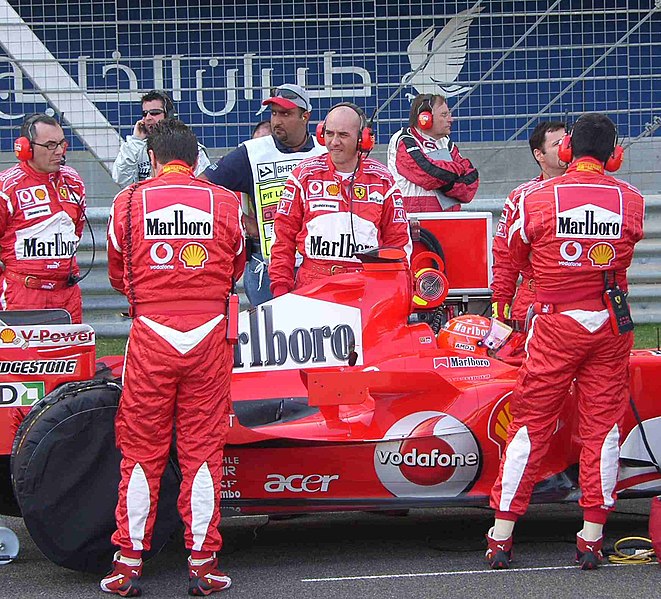
Marlboro is also known for its sponsorship of motor racing. This started in 1972 with its sponsorship of Formula One teams BRM and Iso Marlboro-Ford. The former took one win at the very wet Monaco Grand Prix.
For 1974 Marlboro dissolved its sponsorship of both teams and became famously associated with the McLaren team, which brought it its first constructors' championship and its drivers title for Emerson Fittipaldi. The team was successful through to 1978, with another world champion in James Hunt in 1976. Following that the partnership went through a dry patch until Ron Dennis's Project Four organisation took over the team in 1981. Marlboro-sponsored McLarens dominated F1 for much of the 1980s and early 1990s, with Niki Lauda, Alain Prost and Ayrton Senna between them winning the drivers' championship each year from 1984 to 1991, with the exception of 1987.
After the departure of Ayrton Senna in 1993, Marlboro McLaren did not win a race for three years. Marlboro ended their sponsorship of the team in 1996, which ended the famous red and white McLaren livery. Marlboro also sponsored Scuderia Ferrari as secondary sponsor from the mid 1980s as a result of company president Enzo Ferrari, who refused to allow "outside" sponsor brands to appear on his team cars. After his death in 1988, Marlboro began to take over as the primary sponsor which they would be later officially branded as Scuderia Ferrari Marlboro.
In September 2005, Ferrari signed an extension of their sponsorship arrangement with Marlboro until 2011. This comes at a time when tobacco sponsorship has become wholly illegal in the European Union (including F1 races) and other major teams have withdrawn from relationships with tobacco companies, for example McLaren ended their eight year relationship with West, Renault broke with JT and BAT withdrew in 2006. In reporting the deal, F1 Racing magazine judged it to be a "black day" for the sport, putting non-tobacco funded teams at a disadvantage and discouraging other brands from entering a sport still associated with tobacco. The magazine estimates that in the period between 2005 and 2011 Ferrari will receive $1 billion from the agreement. Depending on the venue of races (and the particular national laws) the Marlboro branding will be largely subliminal in most countries. In April 2008, Marlboro dropped their on-car branding on Ferrari.
Marlboro also sponsored the Alfa Romeo Formula One team between 1980 and 1983, although unable to match up to its pre-war and 1950s heyday, the team only achieving one pole position, one fastest lap and four podium finishes.
Other racing series
Since their start in Formula One, Marlboro has also sponsored numerous teams and races, from Joest Racing in Group C in 1983 to Toyota at the 24 Hours of Le Mans in 1999 (despite a tobacco ban in France) and Marlboro Masters Formula Three race in Zandvoort.Marlboro sponsorship in Champ Car (also known as 'CART' and 'IndyCar' at that time) dates back to 1986. The Penske cars in the Indy Racing League (IRL) currently run in Marlboro's distinctive red and white colors. In 2006, a Marlboro-sponsored car won the Indianapolis 500. However for the 2007 season, Marlboro have ceased their sponsorship of the Penske Cars, their place being taken by Kodak, and later Cellco Partnership. The team will retain the colour scheme. Where 'Marlboro Penske' appeared on the side of the cars, 'Team Penske' replaced it. Although "Marlboro" does not sponsor Team Penske, Philip Morris USA is still Team Penske's main sponsor, and the Penske team's new name, Penske Championship Racing, reflects the Cellco Partnership sponsorship.
Marlboro also sponsored the Australian Marlboro Holden Dealer Team from 1974 through to 1984. The Marlboro branding gave rise to some of Australia's most prominently recognizable race cars such as the L34 and A9X Torana, as well as the famous VK Group C "Big Banger" Commodore of Peter Brock and Larry Perkins Bathurst winning fame. As well as this, in Motorcycling Grand Prix, Marlboro sponsored the Kenny Roberts run Yamaha team in 500cc as well as one of his former rider, Wayne Rainey's team in the 250cc class. As a result of their sponsorship, Marlboro decals on race replica bikes became one of the most popular decal kits that were available. Marlboro nowadays sponsors the Ducati MotoGP team whom Casey Stoner rides for, despite as of the 2009 Grand Prix Motorcycle Racing Season, they are only allowed to brand the bikes at 1 round, in Qatar.
Marlboro also has a long history in rallying sponsorship, including with the factory World Rally Championship teams of Toyota (notably with Freddy Loix until the end of 1998), Mitsubishi (to whom Loix moved from 1999 until 2001, with the iconic livery remaining on successive Lancer Evolutions until the marque's temporary WRC withdrawal at the end of 2002), and Peugeot, from 2003 to 2005. During the 2007 GP2 Series Season, ART Grand Prix were also sponsored by Marlboro. Marlboro are generally credited as being among the most important of sponsors to the world of Formula-1 (and motor racing in general), having provided financial backing to countless young racers who may not have otherwise been given the opportunity to compete. In mid-2006, special "racing editions" of Marlboro Red were sold in the UK, with a Ferrari-inspired design, although the Ferrari name and badge were not used.
(c)
Подписаться на:
Сообщения (Atom)