Altria is scheduled to announce its fourth quarter earnings on
January 25. The U.S.-based tobacco company posted strong results in the
third quarter with 2% y-o-y growth in both revenues and gross margin.
For the nine months ended September 2012, revenues and gross margin were
up 4% and 9% y-o-y respectively. Revenue growth was led (in absolute
terms) by smokeable products (up 2.1% y-o-y), followed by smokeless
products (up 2.6% y-o-y). Revenue growth in both the segments was driven
by higher list prices and higher reported shipment volume,
partially offset by higher promotional investments and higher volume
growth in discount brands. Effective cost management due to the ongoing
cost reduction program added to the effect of higher list prices to push
operating margins higher for the company.
понедельник, 28 января 2013 г.
Altria’s Earnings Rely On Better Pricing For Smokes

пятница, 25 января 2013 г.
Just the Facts on Smoking

We applaud Judge Gladys Kessler’s ruling ordering tobacco companies to
publish corrective statements that say they lied to us about the dangers
of smoking and that clearly state the deadly health effects of smoking.
These statements are not “forced public confessions,” just the
indisputable truth.
The statements will also correct public misconceptions about the health
benefits of “low tar” and “light” cigarettes. Smoking kills, on average,
1,200 Americans a day. We think that it is shameful that Big Tobacco
has been concealing the dangers of smoking for decades.
In the United States, smoking kills more people than AIDS, alcohol, car
accidents, murders, suicide, drugs and fires combined, according to The New York Times. It’s time the
American public heard that sobering fact from the companies that have
profited from the loss of life. It’s not easy to tell the truth when
you’re Big Tobacco, but the time to do so is now.
четверг, 10 января 2013 г.
Kim Jong Un loves comic books and foreign cigarettes

Kim Jong Un, top leader of the Democratic People’s Republic of Korea (DPRK), has largely been a mystery to the whole world. His personal life was rarely reported in the country’s official media, but S.Korean media has dished out some fun facts about him as a person.
For one thing, Kim Jong Un seems to be a devoted reader of Japanese comics, according to a former classmate of his.
“He liked comics especially Japanese manga.”
Classmates said he is also an avid skier and a computer-game player, and fanatical about basketball — particularly the fortunes of the Chicago Bulls.
Kim is also crazy about James Bond, Jean-Claude Van Damme and Jackie Chan movies.
Also, pictures released by KCNA show Kim Jong Un enjoying a cigarette moments after the launch of its rocket Wednesday morning, reports .
It’s not the first time Kim has been pictured with a cigarette by KCNA, with footage of him visiting a gymnasium earlier this year sparking controversy for showing him using gym equipment with cigarette in hand.
Kenji Fujimoto, Kim Jong Il’s former sushi chef, was reported to have said that Kim Jong Un began to smoke cigarettes and drink liquor when he was around 15.
According to reports, Fujimoto said Kim Jong Un was “one who loves to smoke,” adding that he likes to smoke Yves Saint Laurent, among others.
четверг, 3 января 2013 г.
Just what is third-hand smoke?

Smoking is bad for your health. And second-hand smoke - the cloud of cigarette exhaust that we inhale when those around us are smoking - is nearly as dangerous.
But what about third-hand smoke? Chances are you've never heard of this concept before, but it "could have some dangerous health consequences," said Greta Roberts Broneil, assistant director of health for the town of Stratford.
Third-hand smoke refers to the chemicals in smoke that stick around long after a cigarette is extinguished. They linger on clothes, in hair, on skin, in carpets and blankets, and on walls, toys and any number of surfaces.
In an effort to inform the public about this little-known concept, Stratford is launching a third-hand-smoke awareness campaign after the start of the new year, according to CTPost.com. The program aims to help people, particularly children, limit their exposure to these chemicals, which can include nicotine, arsenic and lead.
It's not exactly clear how dangerous third-hand smoke is, but health experts said it makes sense that smoke residue can be unhealthy if inhaled or ingested. Broneil said children are particularly vulnerable to third-hand smoke as they're more apt to crawl or roll around on the floor and put toys and other items in their mouths
The American Cancer Society has said that no cancer risks from third-hand smoke have been measured, but the health effects of these residual chemicals are "an active area of research."
среда, 19 декабря 2012 г.
Low nicotine cigarettes would reduce smoking
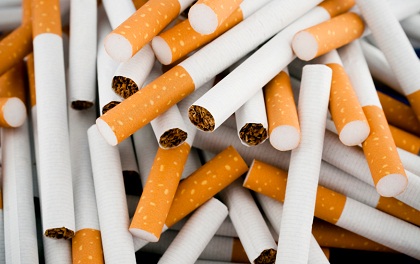
Introducing a low tax category for very low nicotine content cigarettes would rapidly reduce smoking rates to much lower levels, according to a public health medicine specialist.
In his study, published in the New Zealand Medical Journal, End Smoking NZ Trust chairman Murray Laugesen found that imposing less tax on denicotinised, or denic, cigarettes would reduce consumption of normal, addictive cigarettes.
A two-tier excise policy would be kinder to smokers, allowing them to select and smoke a mix of expensive addictive cigarettes and low-cost denics to control smoking costs, reduce cravings and help people quit, according NZ Herald.
"A lower tax rate classification for denics would make it politically easier to increase the price of (addictive cigarettes) and thereby reduce smoking more rapidly to much lower levels," Dr Laugesen concluded.
He said all cigarettes generate toxic chemicals in the smoke regardless of nicotine content, but reducing the degree of addiction would make success easier for the one third of smokers who attempt to quite each year.
"Sale of denic cigarettes wherever (addictive cigarettes) are sold would provide an escape product for addicted smokers facing higher prices each January over the next four years."
He said denics could succeed in New Zealand because smokers would not be asked to quit smoking, only to smoke less nicotine.
понедельник, 10 декабря 2012 г.
Council ready for law on new smoking bans S

DUBBO ratepayers will save money and perhaps live longer and healthier lives when state enforcement of smoke-free outdoor public places starts next month.
From January 7, smokers will risk fines of up to $550 if they light up at the entrance to shopping centres, hotels, schools and other prohibited areas.
The law that NSW Health officers will enforce will eclipse a well-intended but "reasonably toothless" non-smoking policy introduced by Dubbo City Council in 2005 for all its facilities, according to Daily Liberal.
It had been responsible for advertising the pioneering policy - a cost of about $10,000 to ratepayers - but now the duty will lie with the government department.
The savings are just one reason why council community services director David Dwyer has welcomed the imminent introduction of the reforms.
"Certainly in the long-term you pay less for smoking-related diseases, not just in smokers, but also passive smokers," Mr Dwyer said.
"Hopefully it will encourage people not to take up smoking, and they can use their money for something else like gym fees, private health insurance or kids' education."
The council and its counterparts across the state received notification of the amendments to the Smoke-free Environment Act 2000 last week.
In a letter, chief health officer Kerry Chant said the changes to the act would outlaw smoking at a number of public facilities including playgrounds, swimming pools, sports grounds and public transport stops and stations.
Some of those had already been the subject of council policy, but Mr Dwyer said the "big one" for everyone would be the ban on smoking within four metres of a pedestrian entrance to or exit from a public building.
There was a long list of types of buildings covered by the act and it was likely to have ramifications at Dubbo.
вторник, 4 декабря 2012 г.
'Hiding' Cigarettes in Stores Might Keep Kids From Smoking

U.S. teens are much less likely to buy cigarettes if they are hidden from view, new research suggests.
The study tracked the purchases of a group of adolescents as they "shopped" in several different virtual convenience stores that contained different cigarette sale scenarios. Some stores featured open displays of tobacco products for sale, while others strategically hid their cigarettes behind a cabinet. Similarly, cigarette advertising was either prominent, hidden or banned.
"Studies show that because tobacco displays and ads are so common in stores, they may give kids the false perception that smoking cigarettes is a common behavior," explained study author Annice Kim, a research public health analyst with the public health policy research program at RTI International in Durham, N.C. "Tobacco displays also influence adults to purchase cigarettes when they had not planned to, which may make it harder for current smokers to quit and may even influence recent quitters to relapse."
Passage of the U.S. Tobacco Control Act in 2009 gave states and local governments the legal means to tackle the issue by allowing them to restrict various aspects of cigarette advertising strategy and placement, informs Health Day.
"[So] banning the visible display of tobacco products is one option that states are considering," along the lines of current bans already in place in both Canada and Australia, Kim said.
Подписаться на:
Сообщения (Atom)