среда, 25 июля 2012 г.

Tobacco industry mistrusted over excises


Anti-smoking groups have told MPs that the tobacco industry is likely to undermine tax increases which aim to discourage smoking. The Finance and Expenditure Select Committee is hearing submissions on a bill which implements the Government's excise increases announced in this year's budget.

Under the legislation, the excise tax will increase by 10 percent a year at the beginning of each of the next four years, in addition to the annual inflation-indexed increase. The of ASH director Ben Youden, told the committee on Wednesday morning that a factor they have to consider is the tobacco industry's ability to undermine excise increases with pricing strategies.

Reynolds American net income up on higher prices


Cigarette maker Reynolds American's net income climbed more than 35 percent in the second quarter as higher prices and cost-cutting helped it recover from year-ago results that had been dragged down by legal charges. But the nation's second-biggest tobacco company also saw a much steeper decline in the number of cigarettes it sold than the rest of the industry. The Winston-Salem, N.C., company said heavy promotional activity by its competitors drove its cigarette volumes down nearly 7 percent to 18.1 billion cigarettes, compared with an estimated total industry volume decline of 1.7 percent. Its R.J. Reynolds Tobacco subsidiary sold 4 percent less of its Camel brand and volumes of Pall Mall fell 3.6 percent. Camel's market share fell slightly to 8.3 percent of the U.S. market, while Pall Mall's market share fell 0.2 percentage points to 8.4 percent.

 The company has promoted Pall Mall as a longer-lasting and more affordable cigarette as smokers weather the weak economy and high unemployment, and has said half the people who try the brand continue using it. Still Reynolds has faced pressure from its competitors looking to attract more smokers looking to save money. "There's a lot of price competition in the marketplace, there's a lot of promotions out there," CEO Daniel M. Delen said in a conference call with investors. "Because there are so many low-priced offers, particularly from other premium brands in the marketplace, what we're actually seeing currently is the amount of new trialists out there for the (Pall Mall) brand has gone down significantly over time."

 Reynolds reported net income of $443 million, or 78 cents per share, for the three-month period ended June 30. That's up from $327 million, or 56 cents per share, a year ago when the company recorded charges related to a legal case that hurt its results. Adjusted earnings were 79 cents per share, beating analysts' expectations of 76 cents per share. Its shares fell 39 cents to close at $45.35 Tuesday. Revenue excluding excise taxes fell 4 percent to $2.18 billion from $2.27 billion a year ago. Analysts polled by FactSet expected revenue of $2.24 billion. Reynolds American and other tobacco companies are also focusing on cigarette alternatives such as snuff and chewing tobacco for future sales growth as tax hikes, smoking bans, health concerns and social stigma make the cigarette business tougher.

Volume for its smokeless tobacco brands that include Grizzly and Kodiak rose nearly 11 percent compared with a year ago. Its share of the U.S. retail market grew 1.7 percentage points to 32.4 percent. The company on Tuesday also said it will begin a test market in the Des Moines, Iowa, area of a nicotine gum under the Zonnic brand aimed at helping people stop smoking. In 2009, Reynolds bought a Swedish company Niconovum AB, which makes nicotine gum, pouches and spray products. The test market set to begin during the third quarter will be the first of its products to be sold in the U.S. Reynolds American also reaffirmed its full-year adjusted earnings forecast in the range of $2.91 and $3.01 per share. Analysts expected earnings of $2.95 per share.

Medical marijuana should be left to communities to decide, legislator says


Two dozen people gathered Tuesday night at Birmingham's Baldwin Public Library to hear a state lawmaker say a bill he sponsored could close a gap in the state law on medical marijuana and make it easier for "little old ladies" to get the drug. State Rep. Mike Callton, a Republican from Barry County, north of Kalamazoo, said his bill would let each Michigan city, township and village decide for itself whether to allow "provisioning centers" for distribution of medical marijuana. Many medical users say Michigan needs a system of public distribution centers, often called dispensaries -- although Callton said he avoids that term because it became controversial after state Attorney General Bill Schuette declared dispensaries illegal.

The meeting was held in the heart of Oakland County, scene of numerous police raids and criminal prosecutions of dispensaries in 2010 and 2011 by county authorities, who repeatedly have said they were obligated to shut down dispensaries. Other counties have taken different tacks, including Wayne and Washtenaw, where dispensaries have remained open as cases to determine their legality work their way to the Michigan Supreme Court. "How many of you have been arrested?" Callton asked the crowd. Ten people raised hands. "How many have had your property seized?" he asked next. Six hands went up. "And how many of you live in fear of being arrested?"

Nearly every hand went up. Callton is sponsoring House Bill 5580, which he said would guide municipalities on how to regulate marijuana distribution centers. Attorney Michael Komorn of Southfield said it also would reduce the ways some county prosecutors and sheriffs have curtailed legal access. The bill is in the House Judiciary Committee. Callton expects it won't come to a vote in the full House until next year. Callton said he's one of a handful of Republican lawmakers who say Michiganders should have fewer obstacles to obtaining medical marijuana.

That represents a big change of heart for the chiropractor, who said he voted against allowing medical marijuana in Michigan when the statewide vote was held in 2008, but then began seeing patients who benefited from medical marijuana. One was "a sweet 75-year-old lady, definitely not a hippie," who was able with medical-marijuana candies to control her tremors from Parkinson's disease "enough to get a good night's sleep again," he said. Members of the Birmingham Compassion Club hope the bill passes, said club director Chad Carr. "A lot of us need protection" from overzealous police, Carr said.

PhytoSPHERE Systems, a Medical Marijuana Inc Portfolio Company, to Bring Production Facilities to Europe through Canipa Holdings


Medical Marijuana, Inc. MJNA -6.67% a leading hemp industry innovator, is pleased to announce that PhytoSPHERE Systems, a portfolio company of MJNA that develops pharmaceutical grade medicinal hemp production facilities, is expanding its production facilities to Europe. This expansion will be done through MJNA's newly formed portfolio company Canipa Holdings, which has established an office and team in the city of Bucharest, Romania, to handle its European product launch and distribution.

Canipa Holdings has been formed to assist Medical Marijuana Inc.'s expansion and marketing efforts into Europe. Canipa Holdings will focus its efforts on obtaining European product and marketing approvals for the entire line of Medical Marijuana Inc.'s portfolio of products as well as obtaining various licenses for the production of industrialized varieties of hemp. About PhytoSPHERE Systems LLC PhytoSPHERE Systems, LLC is the world's leading cannabinoid based biotechnology company that builds and develops growing, packaging and extraction technologies and deploys them in self-contained, highly efficient state of the art facilities as well as traditional hemp agricultural facilities, for the pharmaceutical and neutraceutical raw ingredients markets.

PhytoSPHERE's highly efficient growth, packaging and extraction technologies provide clients with a compact, safe, pollutant-free facility which will allow them to: Completely control the cultivation environment Greatly increase plant yields that significantly exceed traditional methods Reduce per-unit costs compared to traditional methods by eliminating the use of pesticides, fungicides and herbicides. Produce Pharmaceutical grade extracts. Establish antibacterial environments and packaging systems. 

Control post production processing with proprietary standardization methods. PhytoSPHERE's core technologies consist of: A module that places rows of plants in a manner to accelerate growth rates. Computer operated sprayers that ensure even distribution of nutrients to plants. A proprietary antibacterial product clipping, curing and packaging system, allowing for a truly pharmaceutical grade method of cultivation. An extraction and production process for cannabinoid based compounds derived from the cannabis and /or hemp plants, which uses standardized processes and technology to create the world's leading pharmaceutical grade extracts / oil / raw ingredients.

понедельник, 16 июля 2012 г.

New Law In Santa Monica Affects The Smoking Community


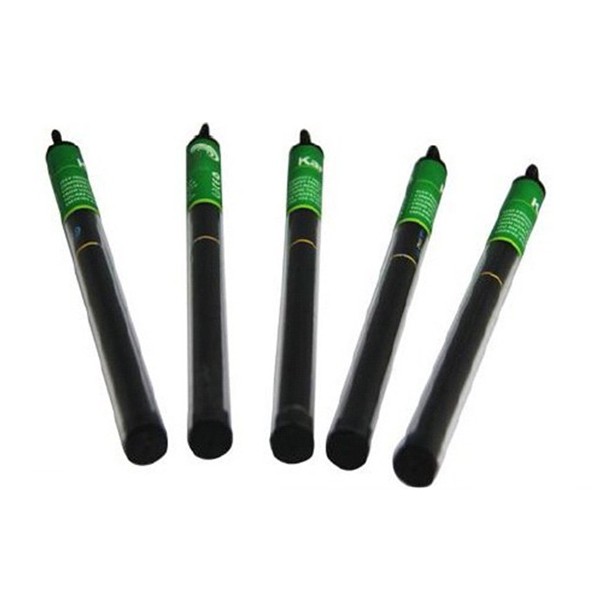
Miami Lakes, FL (PRWEB) July 16, 2012 Smokers renting or seeking to rent in Santa Monica, CA should consider the benefits of electronic cigarettes. The City Council of Santa Monica approved a new law banning smoking in apartments. Among many benefits with EverSmoke Electronic Cigarettes, smoking anywhere ranks high in the list. EverSmoke offers a safe environment for the smoker and the non-smoking community. There are no lingering scents, bad breath or yellow teeth associated with an EverSmoke e-cig.

The electronic cigarette surpasses other leading e-cig brands with its superior technology, insuring a clean smooth draw that produces maximum vapor. Since EverSmoke produces such a realistic smoking experience, it is the ideal product for traditional cigarette smokers to switch to while enjoying the same smoking experience and not having to worry about breaking the new Santa Monica law. According to The Santa Monica Daily Press, apartment residents are now required to designate their unit as non-smoking or smoking.

If there is no response from the request then the resident loses their right to smoke. Also, all tenants smoking preferences will become public information to every resident in said apartment complex. One of the concerns about smoking inside apartments is the tendency to stain walls and penetrate carpets with odor. However, with EverSmoke the substance that comes out of an e-cig may look like smoke, but it is actually pure water vapor, which will leave no tar, ash or lingering smells in any home.

An EverSmoke cartridge is filled with a nicotine solution instead of tobacco so the consumer can obtain all the same experiences that come with traditional cigarette smoking. EverSmoke commented on the new law stating “By smoking an EverSmoke e-cig, nobody has to worry about how their apartment smells, what their neighbors think or who might complain about any smoke and you have your own privacy!

This is the perfect solution to Santa Monica’s new law and helps smokers switch to the better smoking alternative; it’s turning a negative into a positive!” The Basic Starter Kit has what one needs to begin enjoying the freedom and satisfaction of smoking anywhere without all the harmful side effects. The Basic Starter Kit includes a lithium ion standard battery, a portable wall charger, a USB charger and five nicotine cartridges. The flavored cartridges are offered in Very Vanilla, Cherry Crush, Cool Menthol, Peppermint Party, Coffee Creation, Classic Tobacco, Golden Tobacco, Royal Tobacco, Piña Colada and Peach Passion. All flavors come in four different strengths: Full Flavored, Light, Ultra-Light and no nicotine.

The economics of cigarette taxes


The Congressional Budget Office recently took a look at how cigarette taxes affect the federal budget. It found that a 50-cent cigarette tax hike would save the government money as Americans got healthier, but nearly all of that new revenue would get wiped out as people started living longer.

If cigarette taxes went up there would—perhaps unsurprisingly—be fewer smokers. Demand for cigarettes tends to be relatively elastic and responsive to price, especially among younger smokers. The CBO estimates that 4.3 percent fewer 18- to 24-year-olds would smoke by 2021 if a 50-cent tax hike were added today. Health care costs would drop as government programs would see fewer tobacco-related diseases.

Reduced health care spending would, in the short term, reduce the deficit. Gains in health care would soon be followed by gains in longevity. And when Americans live longer, the government pays out more benefits through programs like Medicare and Social Security.

Court rekindles lawsuit over Camel cigarettes loyalty program


A appeals court on Friday revived a potential class action lawsuit against Reynolds American Inc over the cancellation of its "Camel Cash" customer loyalty program. Subsidiary R.J. Reynolds Tobacco Company urged consumers to buy Camel cigarettes, save Camel Cash certificates included in the packs, enroll in the program and redeem the certificates for merchandise featured in RJR catalogs, according to the opinion. RJR ceased redeeming the certificates in 2006, making the unredeemed Camel Cash worthless.

Ten individuals who joined the program sued, and a lower court judge dismissed the case. However, the 9th U.S. Circuit Court of Appeals on Friday revived the litigation, saying RJR must defend some claims including breach of contract. The 9th Circuit sent the case back to a federal court in Los Angeles for further proceedings.

 An RJR representative could not immediately be reached for comment. The case in the 9th Circuit is Amanda Sateriale et al., individually and on behalf of all others similarly situated v. R.J. Reynolds Tobacco Company, 11-55057.